


Two rocker switches can look exactly the same. The housing, actuator, dimensions, and electrical ratings may all match, yet their performance over time can be completely different. One switch may still be operating reliably after years of daily use, while another develops contact problems, overheats, or fails much sooner than expected.
The difference usually isn’t obvious from a catalog or product photo. It comes down to what’s inside the switch: contact materials, spring quality, molding accuracy, sealing design, and how consistently each component is manufactured and tested. These details determine how well a switch performs under repeated use and in demanding environments.
For engineers and purchasing teams, price is only one part of the decision. A lower-cost switch that fails in service can lead to equipment downtime, warranty claims, and costly replacements. In many cases, a better-built switch reduces maintenance and delivers a lower overall cost over the life of the product.
In the following sections, we’ll look at the factors that separate a high-quality rocker switch from an average one, the questions worth asking before choosing a supplier, and the manufacturing details that have the biggest impact on long-term reliability.
The Contacts: Where Quality Starts
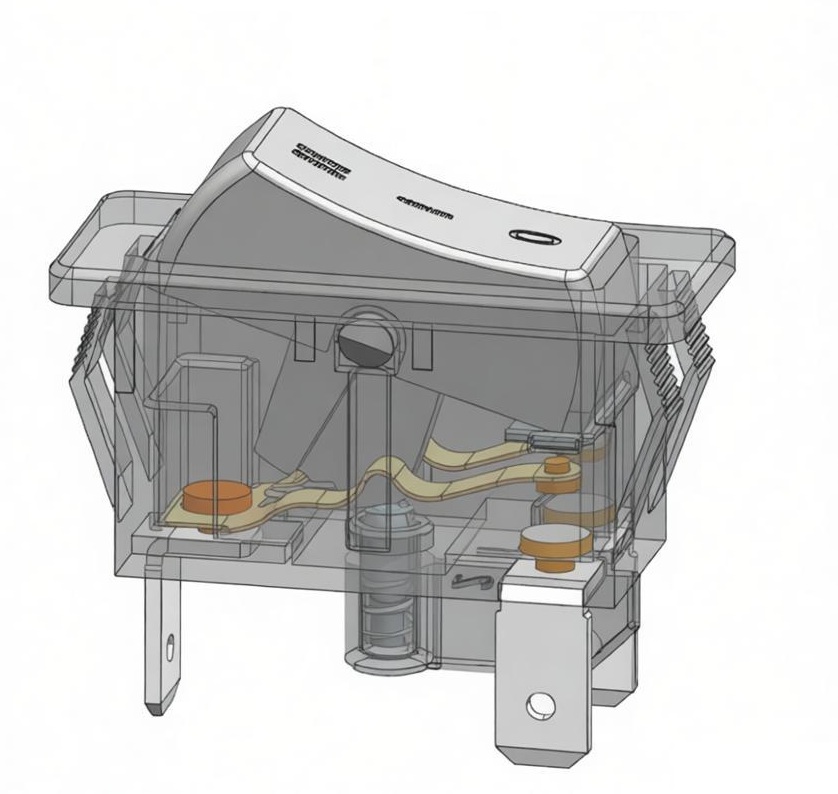
Inside every rocker switch, the electrical contacts are responsible for making and breaking the circuit each time the switch is operated. Their performance depends not only on the contact material, but also on the precision of the stamping, plating, and assembly processes. These details are rarely visible from the outside, yet they have a significant effect on switching reliability and service life.
Contact Material and What It Means for Reliability
Silver alloy contacts are the standard for power switching applications. They offer low electrical resistance and handle arcing well. But not all silver contacts are the same. Cheaper switches use a thin silver plating over a copper or brass base. Over time, especially under high current, the silver layer wears through and the underlying metal oxidizes, increasing contact resistance and generating heat.
Higher-quality switches use solid silver alloy contacts or thicker plating with a nickel underlayer that acts as a diffusion barrier. This prevents the base metal from migrating into the silver surface and keeps contact resistance low over the full life of the switch. For low-current signal applications, gold-plated contacts are preferred. Gold does not oxidize, so contact resistance stays stable even after long periods of inactivity. A quality switch in this category uses at least 0.5 microns of gold over a nickel barrier.
Contact Design: Rivet vs. Stamped
The shape and manufacturing method of the contact itself matters. Riveted contacts are mechanically attached and provide a larger surface area for current flow. They hold up well under repeated arcing. Stamped contacts are punched from sheet metal and cost less to produce, but they can have sharp edges that concentrate current and create hot spots. For switches expected to handle their full rated current regularly, riveted contacts are the safer choice.
The Housing: More Than Just Plastic
The switch body needs to hold internal components in precise alignment while resisting heat, impact, and in some cases, chemicals and UV radiation.
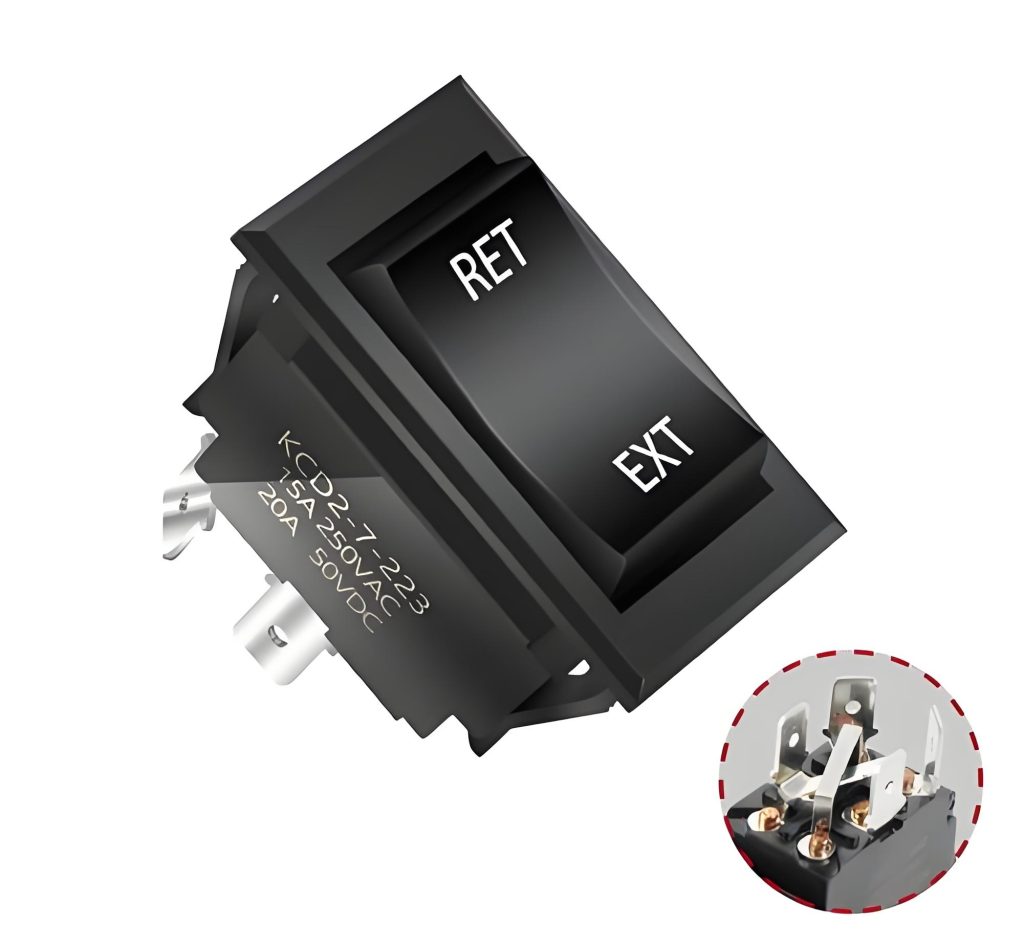
Most switch housings are molded from engineering thermoplastics. Material selection depends on the operating environment. Standard grades may soften or deform when exposed to high soldering temperatures or prolonged heat, while heat-resistant grades are formulated to maintain their mechanical strength under more demanding conditions.
Thermoplastic vs. Thermoset Materials
For continuous operation at 125°C or higher, thermoset plastics behave differently. Once cured, they retain their shape even when exposed to temperatures that would soften most thermoplastics. Although thermoset housings require different manufacturing processes and are generally more expensive, they are commonly used in applications where heat is part of normal operation, such as engine compartments, industrial heating equipment, and high-temperature control systems.
Terminals and Plating
The terminals are where the switch connects to the outside world. Solder lugs, quick-connect tabs, screw terminals, and PCB pins each have their own quality considerations. Across all terminal types, the plating is what matters most.
Tin plating is common and provides good solderability at a low cost. But tin grows whiskers over time, thin crystalline structures that can short adjacent terminals. Quality manufacturers mitigate this with a matte tin finish and a minimum plating thickness of 3 to 5 microns.
Silver-plated terminals offer lower contact resistance than tin and do not grow whiskers, but they cost more. For high-current applications or connections that will be mated and unmated frequently, silver plating on terminals provides a measurable performance advantage.
The Actuator and Tactile Feel
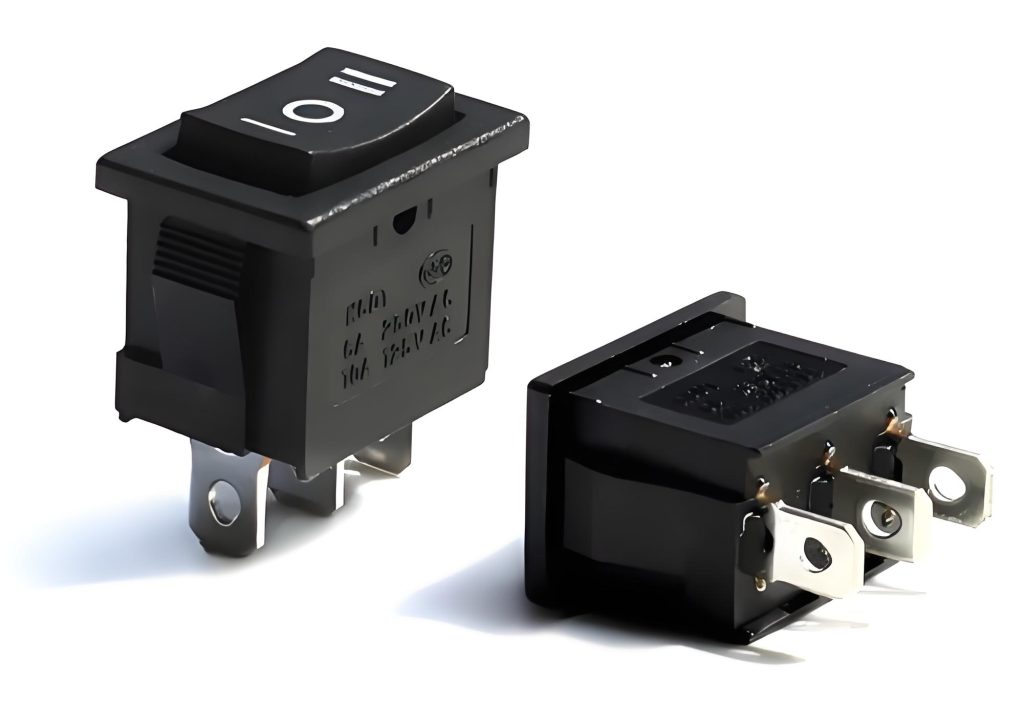
The part of the switch the user touches directly affects how a product feels. A stiff, wobbly, or inconsistent actuator makes an entire control panel feel cheap, even if the electronics inside are excellent.
Quality switches use precisely molded actuators with tight tolerances on the pivot points. This minimizes side-to-side play and keeps the actuation force consistent from switch to switch. Cheaper switches often have wider part-to-part variation, so one switch on a panel clicks firmly while the next one feels mushy. For products where the user interacts with the switch regularly, this inconsistency damages perceived quality.
Testing and Quality Control
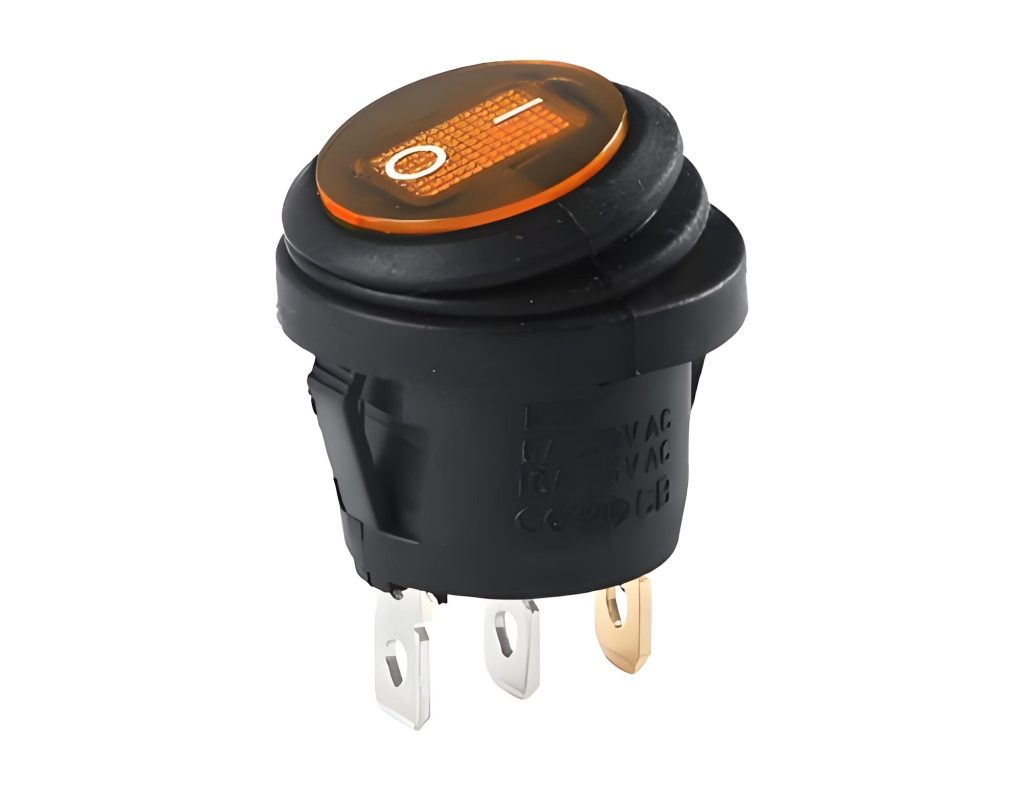
A rated service life tells only part of the story. Consistent performance over thousands of switching cycles depends on how the product is tested as well as how it is designed. Life-cycle testing is usually carried out on production samples under defined electrical loads and operating conditions, with contact resistance and switching performance checked throughout the test.
Additional testing varies with the application. Switches intended for outdoor or industrial use are often evaluated for insulation performance, corrosion resistance, and their ability to withstand rapid temperature changes. Test results like these provide useful information beyond the basic electrical specifications and help engineers compare products intended for demanding environments.
Conclusion
A dependable switch comes from decisions made throughout the manufacturing process: contact alloy, housing material, terminal plating, molding accuracy, sealing design, and production testing. These details are not visible in a product photo, but they have a direct effect on electrical life, temperature performance, and long-term reliability.
For engineering and purchasing teams, the safest approach is to look beyond appearance and unit price. Review the supplier’s materials, certifications, quality-control process, and testing standards. Request samples, install them in the actual equipment, and confirm performance under real operating conditions before moving to production volumes.
For applications in automotive electronics, marine equipment, industrial control panels, outdoor power systems, and machinery, working with an experienced switch manufacturer such as Bituo Elec can help reduce sourcing risk and improve product reliability. A slightly higher component cost is often easier to manage than field failures, warranty claims, or repeated replacements later. Contact our team today for a reliable switch solution!