


Standard push buttons do not last long in public spaces. They get kicked, sprayed with water, and pressed thousands of times a day. Anti-vandal switches are built for these conditions. Bituoelec manufactures a wide range of anti-vandal switches for everything from parking kiosks to industrial control panels.
This guide explains what makes these switches different, what to look for when buying, and how to get the right fit for your application.
What Is an Anti-Vandal Switch and Where Is It Used?
Built Tougher Than Standard Switches
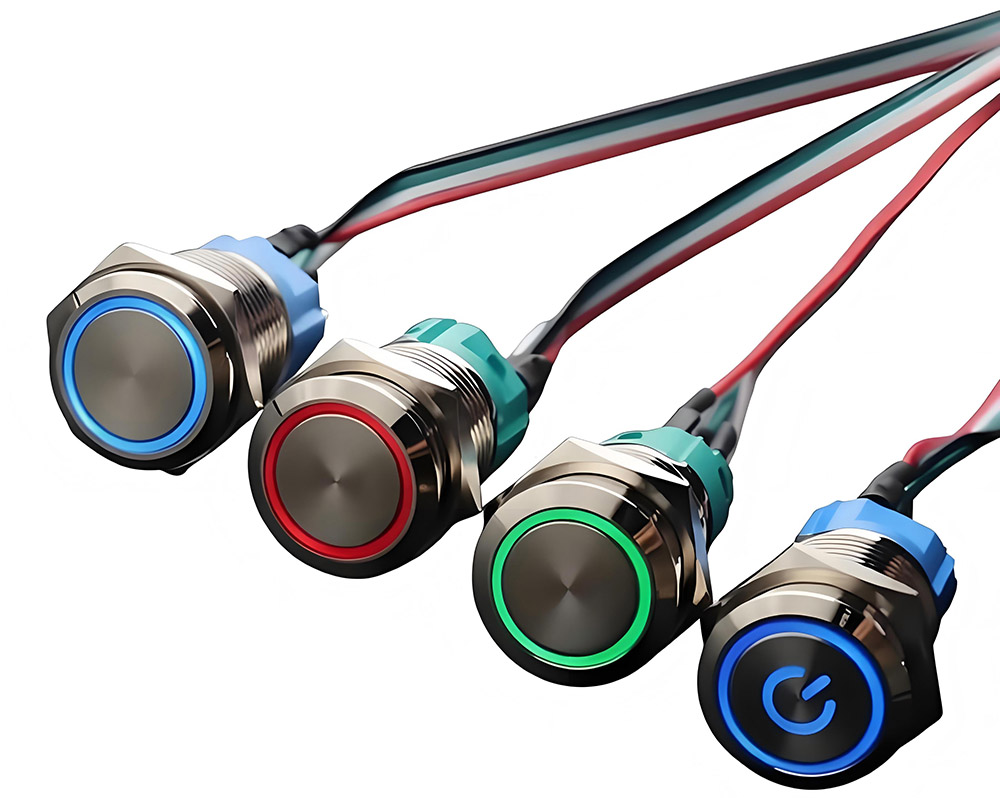
An anti-vandal switch is a push button, often made with a stainless-steel body and actuator, designed to resist physical abuse, water, dust, and temperature swings. The housing is typically thicker than a standard switch. The actuator sits flush or slightly recessed into a metal bezel, making it hard to pry out or damage with blunt force.
You find these switches in places where equipment takes a beating: ticket machines at train stations, access control panels on building exteriors, public restroom hand dryers, outdoor EV chargers, and industrial machinery on factory floors. Anywhere a regular switch would crack or stop working within months.
Key Protection Ratings: IP and IK Explained
IP Rating Tells You Water and Dust Protection

IP stands for Ingress Protection. The first digit covers solids (dust), the second covers liquids (water). An IP67 rating, common on anti-vandal switches, means the switch is fully dust-tight and can survive being submerged in up to one meter of water for 30 minutes.
For outdoor use where rain is the main concern, IP65 is often enough, it handles low-pressure water jets from any direction.
IK Rating Measures Impact Resistance

IK ratings range from IK00 (no protection) to IK10 (20 joules of impact, equivalent to a 5 kg mass dropped from 40 cm). An IK08 rating handles roughly 5 joules, which covers most public abuse scenarios. IK10 is the top tier and is used where deliberate vandalism is a real risk, such as unsupervised outdoor payment terminals.
Common Types of Anti-Vandal Switches
Momentary vs. Latching
A momentary switch only stays active while you press it, release it and the circuit opens. This is what you want for a door release button or a machine jog control. A latching switch clicks into position and stays there until pressed again. Use latching for power on/off functions where you do not want to hold the button down.
Illuminated Options

Many anti-vandal switches come with a built-in LED ring or dot. This is not just for looks. A red ring around a power cutoff button tells an operator at a glance that the circuit is live. Common LED voltages are 3V, 6V, 12V, and 24V. Match the LED voltage to your system or use a separate resistor to drop it down.
How to Choose the Right Switch: Five Things to Check
1. Panel Cutout Size
The most common mounting hole diameters are 16mm, 19mm, and 22mm. Measure your panel before you order. A 22mm switch will not fit a 16mm hole, and drilling a larger hole after the panel is powder-coated is a messy job.
2. Contact Configuration
SPST (single pole, single throw) is the simplest: one circuit, on or off. SPDT (single pole, double throw) gives you a choice between two output paths. For most on/off applications, SPST is enough. If you need to switch between two circuits with one button, pick SPDT.
3. Voltage and Current Rating
Check both the voltage and the current. A switch rated for 3A at 250VAC may behave differently at 12VDC. Switching DC is harder on contacts than AC because DC arcs do not self-extinguish. Always check the DC rating if your application runs on low-voltage DC.
4. Body and Actuator Material
Stainless steel is the standard for the body and actuator because it resists corrosion and looks clean after years of use. For less demanding indoor applications, nickel-plated brass can save cost. The actuator face can be flat, domed, or recessed. Flat and domed are easier to clean. Recessed offers more tamper resistance.
5. Termination Style
Solder lugs are the most common and work for low-volume assembly. Screw terminals make field replacement easier since you do not need a soldering iron. If you are ordering in volume for a production line, ask about custom termination options.
Installation Tips for Long-Lasting Performance
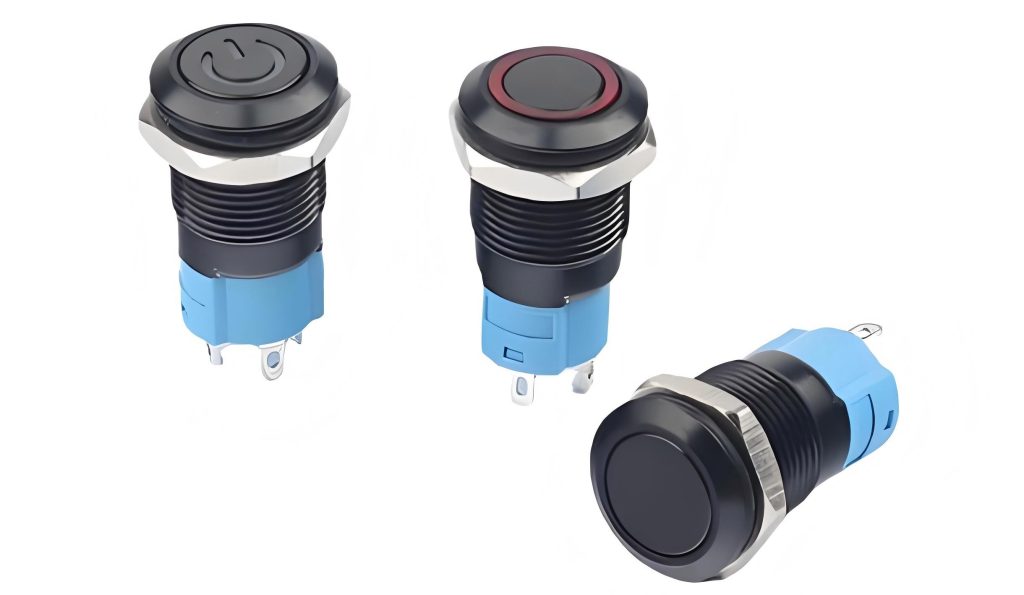
Use the rubber O-ring that comes with the switch. It sits between the bezel and the panel surface and is what keeps water from getting behind the panel. Tighten the mounting nut by hand first, then give it a quarter turn with a wrench.
Over-tightening can crack the bezel or strip the threads. Do not use thread-locking compound on the nut unless the switch manufacturer says it is safe, some compounds can attack the O-ring material.
If you are wiring multiple switches in a panel, leave a small service loop in each wire so you can pull the switch out for replacement without cutting and re-stripping the wires. This adds five minutes to assembly but saves an hour later.
Where Anti-Vandal Switches Make the Biggest Difference
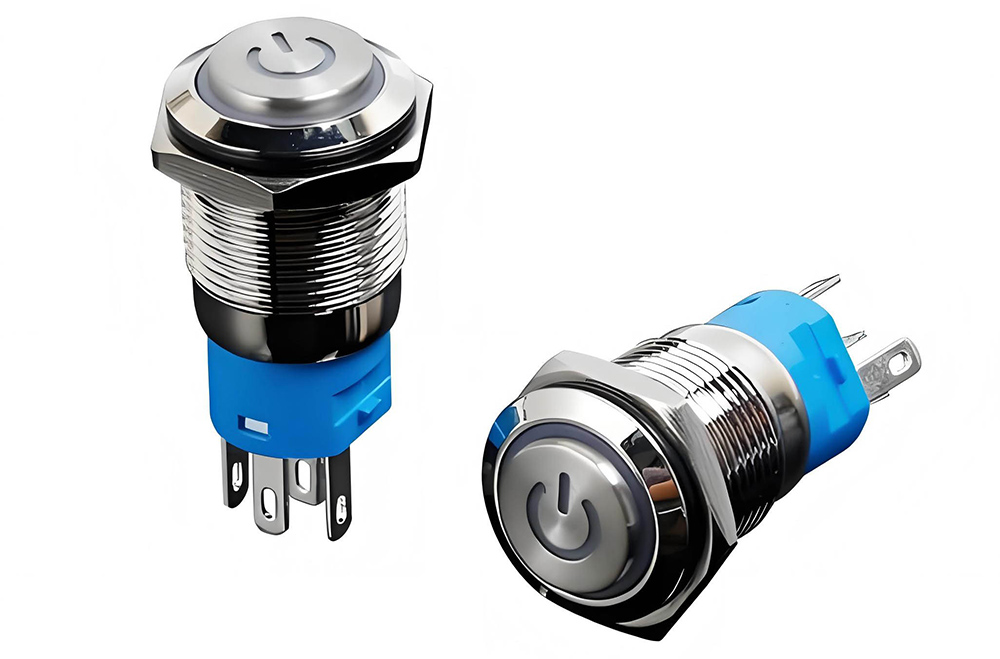
Parking payment kiosks sit outside in rain, snow, and direct sun for years. A corroded switch on a kiosk means lost revenue until a technician can get to it.
Anti-vandal switches with IP67 ratings eliminate this failure point. Access control panels on building exteriors face the same challenge, rain, dust, and the occasional frustrated person hitting the button harder than needed.
Industrial machine controls are another common use. A lathe or CNC panel covered in cutting oil and metal chips needs switches that keep working. Medical equipment carts in hospitals get bumped into walls and doorframes all day. The switch needs to survive the environment without looking beat up.
Frequently Asked Questions
Q1 What is the difference between IP65 and IP67?
IP65 protects against low-pressure water jets from any direction. IP67 protects against temporary immersion in water up to one meter deep for 30 minutes. Use IP67 for outdoor or washdown environments. IP65 is usually fine for indoor industrial use where splashing is possible but not submersion.
Q2 Do I need a momentary or latching switch?
Use momentary if the action only needs to happen while the button is pressed, such as a door release or a horn. Use latching if you want the circuit to stay on or off after you press and release, such as a power switch.
Q3 What size mounting hole is standard?
16mm, 19mm, and 22mm are the most common diameters. 16mm is compact and fits tight panels. 22mm is the industrial standard and fits most off-the-shelf panel cutouts. Always double-check your panel dimensions before ordering.
Q4 Can I use an anti-vandal switch outdoors?
Yes, as long as you pick one with an IP65 or higher rating. Make sure the mounting O-ring is installed correctly to keep water from getting behind the panel.
Q5 What voltage LED should I choose for the ring light?
Match the LED voltage to your control circuit. Common options are 3V, 6V, 12V, and 24V. If your circuit voltage does not match any of these, you can add a current-limiting resistor in series to bring it down. Check the LED current rating so you size the resistor correctly.
Q6 How do I know if a switch is truly anti-vandal or just labeled that way?
Look for an IK rating. A switch labeled “anti-vandal” without an IK rating has not been tested for impact resistance. Reputable manufacturers publish IK and IP test data. Also check the bezel thickness. Thin-walled bezels can deform under impact even if the switch still works.
Get Anti-Vandal Switches from Bituoelec
Bituoelec manufactures anti-vandal switches in 16mm, 19mm, and 22mm sizes with a range of actuator styles, LED options, and contact configurations. Whether you need a dozen for a prototype or thousands for a production line, contact Bituoelec for a quote. Custom OEM and ODM solutions are available for branding, voltage, and termination requirements.