


Pilot lights and indicator lights are often used interchangeably in industrial electrical applications, as both provide a visual indication of equipment or circuit status. The distinction usually comes down to how they’re used and where they’re installed.
A pilot light typically shows whether a machine or circuit is powered or operating. It’s commonly mounted on a control panel and uses a colored lens or LED to display its status. Indicator light is a broader term that includes panel mounted LEDs, small signal lamps, and status lights integrated into electrical equipment.
When selecting components for a control panel or industrial project, understanding these differences can help you choose the right size, mounting style, and electrical specifications. This guide explains how the two terms are used and what to consider when choosing between them.
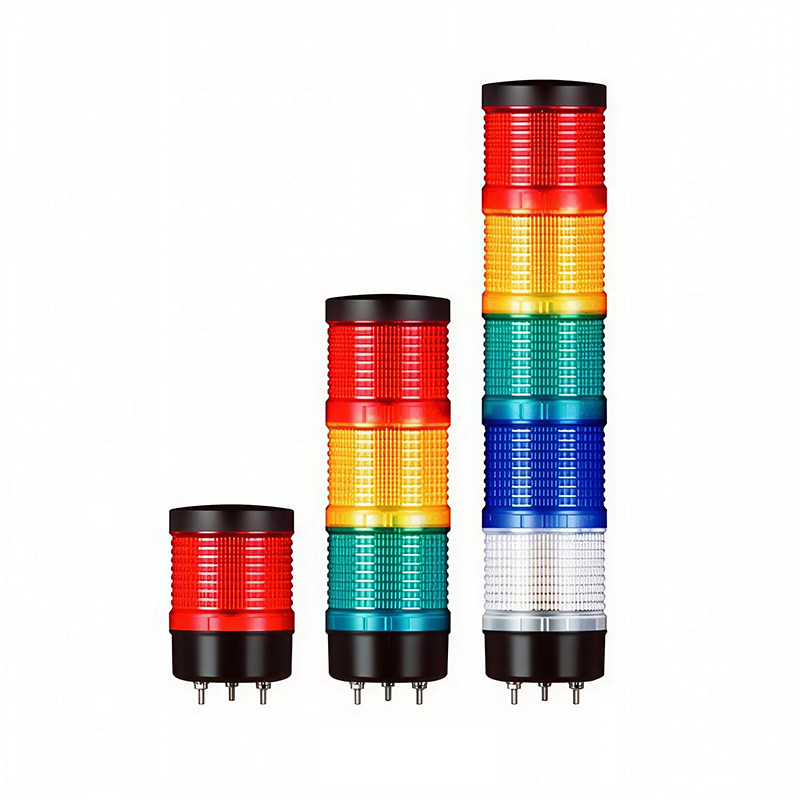
Why the Same Part Has Four Names
Suppliers list one component as a pilot lamp, an indicator lamp, a panel light, or a signal lamp. Nothing changes except the label on the catalog page. The habit is historical, since older panels used incandescent bulbs in metal holders and pilot light and lamp holder were used interchangeably. When LED versions replaced those bulbs, some catalogs simply kept the old names, which is why the same part still appears under four different headings.
The result is a naming problem rather than an engineering one. Compare cutout diameter, voltage range, lens color, and sealing, because those values decide whether the part fits.
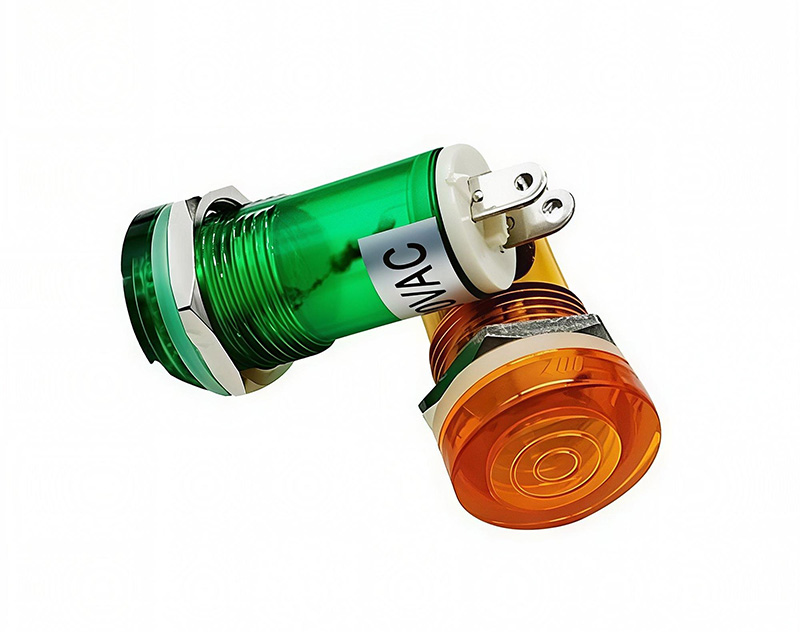
Pilot Light and Indicator Light Side by Side
The table reflects common practice rather than a formal standard. Use it to describe what you need, then confirm the values on the datasheet.
| Feature | Pilot Light | Indicator Light |
|---|---|---|
| Typical function | Shows a circuit is energized | Reports status or a specific condition |
| Common body sizes | 16mm, 19mm, 22mm, sometimes larger | 3mm to 22mm, wide range |
| Lens or diffuser | Domed lens, often with a bezel | Flat or domed, sometimes a bare LED |
| Typical mounting | Panel cutout with a locking nut | Panel cutout, PCB mount, or holder |
| Common voltage options | Line voltage, 24V, 110V, 230V | Low voltage DC through line voltage |
| Where you usually see it | Control cabinets, motor starters | Status panels, test gear, appliance fronts |
Two rows carry most of the decision. Voltage range and cutout diameter are what an engineer checks first, and a catalog title hides both. At the larger end, the LED pilot light bodies in 19mm and 22mm suit a cabinet door.
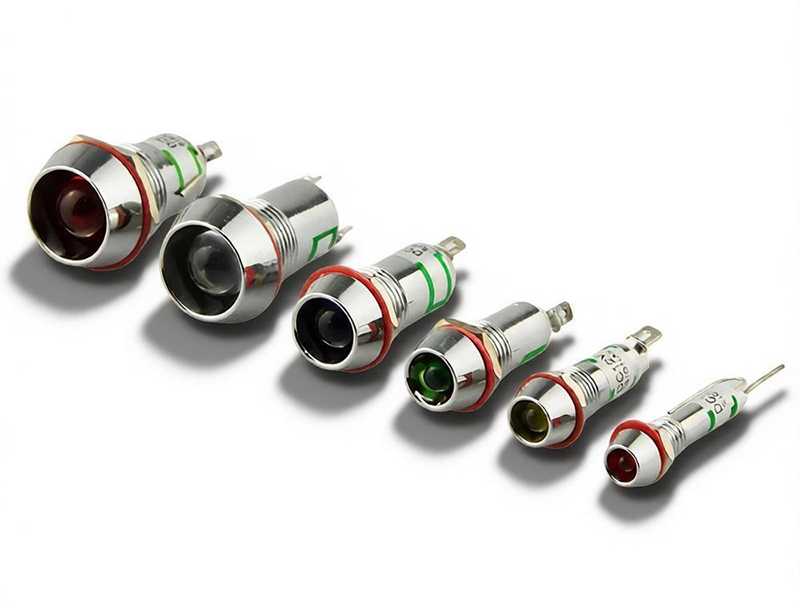
Choosing a Voltage Rating for the Panel
The supply inside the panel sets the shortlist before anything else. A cabinet running on 24V DC needs a different part from a distribution panel fed from a 230V AC bus. Getting this wrong is the most common reason a lamp arrives and does not light.
Low Voltage Control Circuits
On a 24V DC circuit, a bare LED plus a series resistor is a normal design. The resistor value follows R = (Vs – Vf) / If, where forward voltage comes from the LED datasheet and depends on color. This works and it is cheap, but the calculation lands on your desk every time the supply changes.
Line Voltage Panels
On an AC supply, the lamp circuit inside the part differs from a bare LED. It has to limit current and survive the reverse half of the mains cycle. A part marked for direct line voltage already contains what it needs, so you wire it across the supply and it works. Nothing outside tells you what is inside, so read the voltage marking on the body.
A 3V to 220V AC/DC rated part removes the need to stock several variants. One number covers the low voltage test bench and the line voltage cabinet. The BTL19F-D 19mm series from Bituo is rated 3V to 220V AC/DC at 3mA to 20mA, with bodies from 3mm through 22mm. Panels fed from a 120V supply can take the 120 volt LED indicator lights, which connect directly without an external resistor.
What the Colors Mean, and What They Do Not Mean
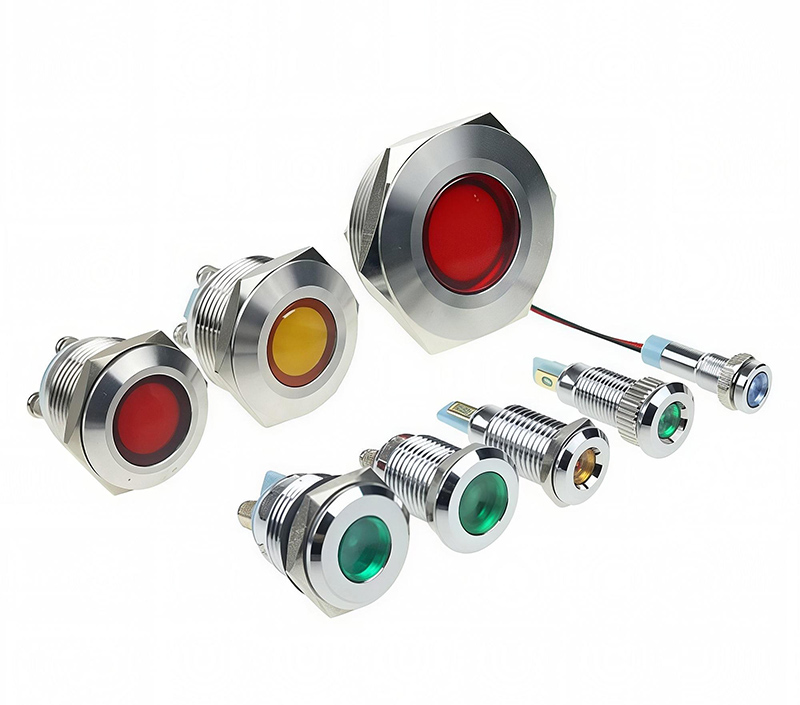
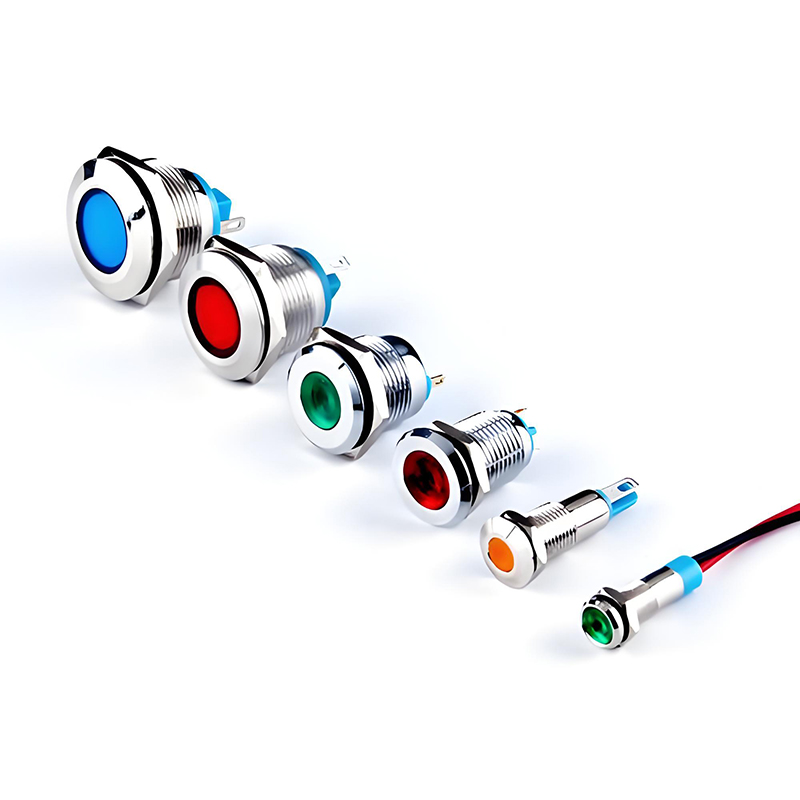
Color is a coding decision, not a property of the lamp. IEC 60073 sets a convention for colors on indicator lights and actuators, and most machine builders follow it in some form. Red for fault, green for normal, yellow for warning, and blue for a mandatory action are the usual readings.
The meaning is set by the machine builder and the local standard that governs the installation, not by the lamp. The same red lens can mean stop on one machine and running on another. What the lamp supplies is a bright, repeatable color that reads across a workshop floor. Red, yellow, blue, green, and white are the common options.
Five Questions That Settle the Choice
Work through these five questions in order, because each answer narrows the shortlist:
What am I reporting: One fact such as power present points to a pilot light. Several conditions on one panel point to indicator lights in distinct colors.
What supply is available: Record voltage and whether it is AC or DC. If both appear across your machines, a wide range part is the simpler stock item.
What panel cutout exists: Measure the hole, not the old part. Cutouts from 16mm to 22mm cover most cabinets, and 3mm to 12mm bodies suit equipment fronts.
Does it need sealing: Washdown areas, outdoor cabinets, and food equipment need a sealed front. A sealed metal body with a waterproof front is the usual answer.
How many colors stay on the shelf: Five colors across three voltages is fifteen part numbers. Five across one wide range part is five.
The fifth question is the one most often skipped, and the one that shows up in the stockroom a year later.
Mounting, Sealing, and Service Life
Mounting is straightforward once the cutout is right, since the body passes through the hole, a nut or bezel locks it front or back, and the terminals sit behind the panel. Leave depth for the wire and the crimp terminal, then check panel thickness before you drill.
Service differs by construction, since a lamp holder takes a replaceable bulb and a failed lamp is a bulb change. A sealed LED unit is replaced whole, which costs more per event but removes the bulb from your spares list.
LED life is quoted at 40,000 hours for the BTL19F-D series. At eight hours a day that is years of service before the lamp reaches the end of its rated life, which is why sealed units cut maintenance on panels that are hard to reach. For builders comparing the two constructions, the 19mm panel indicator lights page lists body sizes and voltage options together.
Sealing deserves a separate check, because a waterproof body protects the panel front while the rear terminals still need a dry enclosure behind the panel.
Conclusion
Send the cutout diameter, the supply voltage, the number of colors, and the panel thickness, and a drawing and a sample can be arranged from those four values. Where we build to a drawing, lens color, voltage range, and body material are set at order, so a custom panel spec is a normal request.
Bituo manufactures switches and panel components across 24 series and 6,000+ models, with OEM and ODM work for customers in more than 70 countries. A photo of the existing panel answers questions about depth and terminal access faster than words.