


Both parts protect a circuit from overheating or overcurrent, and the difference that matters on the bench is what happens after the fault. A thermal fuse opens once and stays open, while a resettable breaker can be returned to service by hand. That gap decides which part belongs in a product and how a technician should approach a unit that has already failed in the field.
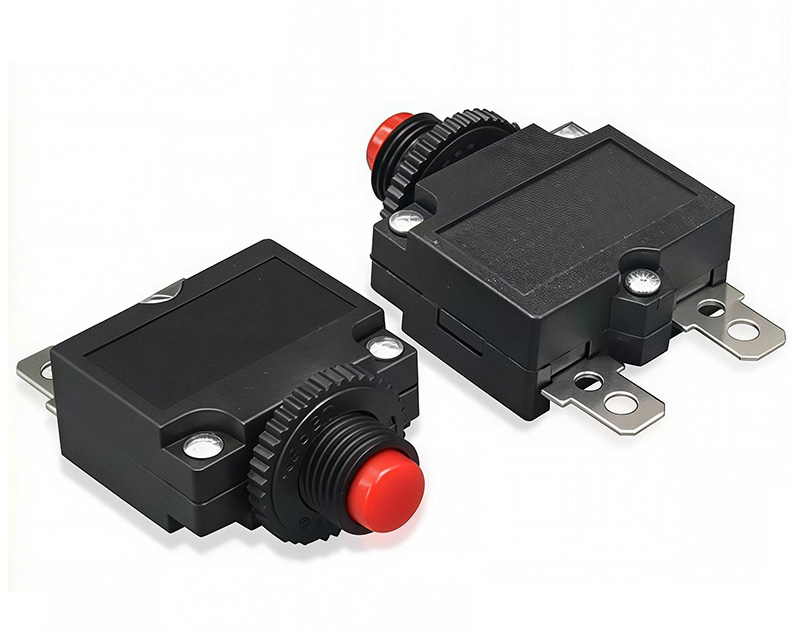
What Separates the Two Families
A thermal fuse is a temperature-sensing device wired in series with the load, and it opens the circuit permanently once the sensed temperature passes its rating. The thermal fuse family is therefore a sacrificial part, because it gives its own life to protect the hardware around it. A circuit breaker switch reads current instead, and its trip element is thermal or magnetic inside the housing. Because that element re-arms after the fault clears, the breaker can go back into service, which changes the repair cost and the maintenance routine. Both parts sit under the same category for overload protection, yet they answer two quite different questions.
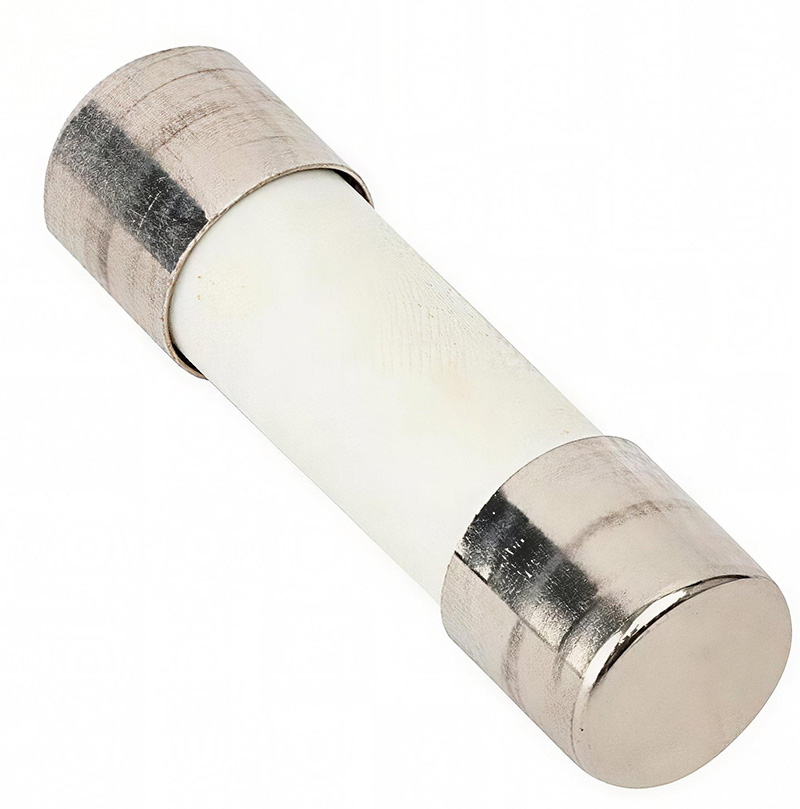
How the Thermal Fuse Family Behaves in Service
The RH-01 is rated 2 A or 3 A at 250 VAC and covers an operating temperature range of 65°C to 285°C with a tolerance of plus or minus 5°C. It mounts by wire installation, which lets the body sit close to the part it protects rather than at a board edge where the surrounding air runs cooler. Contact resistance stays at 50 milliohms or less and insulation resistance at 100 megohms or more, so the part adds very little to the circuit while it is closed. Dielectric strength is 1500 VAC minimum, and OEM and ODM service covers custom lead lengths and body markings.
Tolerance decides whether the protection is useful, because a wide window trips the product early during a warm-up or lets a fault run past the safe temperature. A part rated at 130°C with ±5°C opens somewhere between 125°C and 135°C, which is a narrow enough band for most small appliance and transformer work. A fuse that opens at the low end of its band produces nuisance failures in the field. One that opens at the high end leaves the insulation less margin than the design assumed.
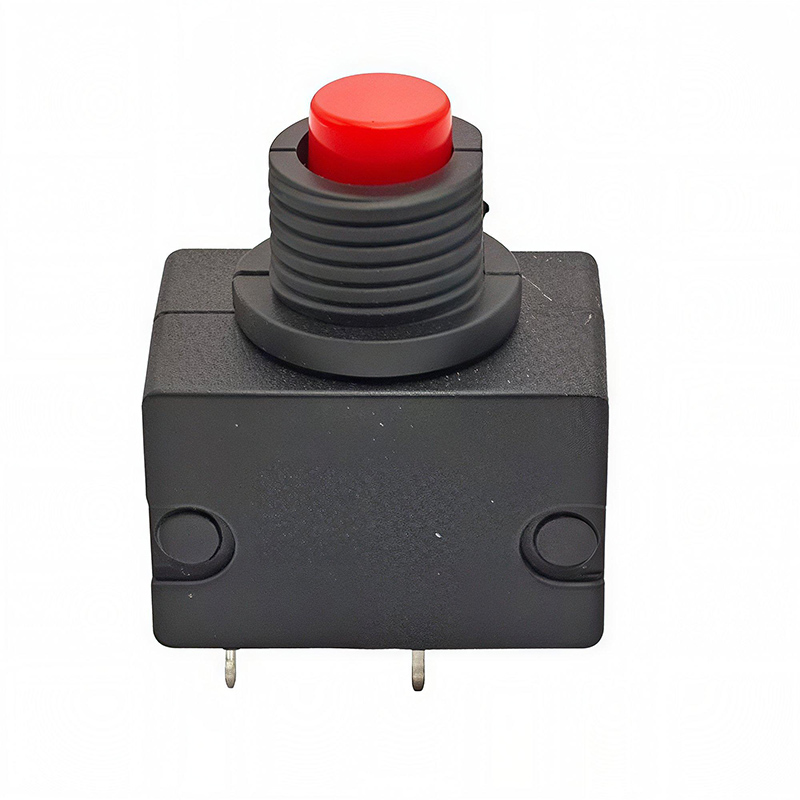
How the Resettable Breaker Family Behaves in Service
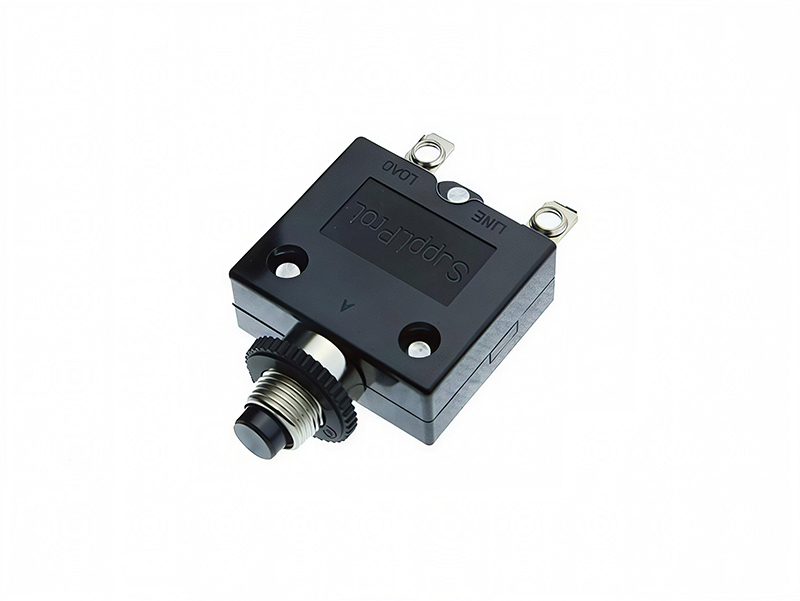
The CBS-2P covers 15 A to 50 A at 250 V AC or DC in a bakelite body with a black button, and it works from -30°C to +80°C. It mounts by solder installation, so the joint must be made well, because a high-current path with a poor fillet will heat on its own. Electrical life is 10,000 cycles and contact resistance is 50 milliohms or less, which suits a part a user may reset many times.
The reset is what turns this into a serviceable component rather than a consumable, since the operator can clear a fault, press the button, and then confirm whether the repair held. That behavior suits battery packs, power supplies, test gear, and portable tools, where a one-shot fuse would otherwise end the shift. The tradeoff is that a breaker can be reset into a live fault again, so whoever presses the button has to know what caused the trip.
Comparison of the Two Types
| Point of Comparison | Thermal Fuse, RH-01 | Circuit Breaker, CBS-2P |
|---|---|---|
| What it senses | Temperature at the mounting point | Current through the circuit |
| What opens the circuit | A one-shot element that melts | A thermal or magnetic trip element |
| Resettable or one-shot | One-shot, replaced after a trip | Resettable by hand |
| Typical mounting | Wire installation against the protected part | Solder installation on the board |
| Typical place in the circuit | Close to the transformer, motor, or heater | In the current path of the pack or supply |
| What to do after a trip | Find the heat source, then replace the part | Find the fault, reset, confirm the repair held |
| Rating within the range | 2 A or 3 A at 250 VAC | 15 A to 50 A at 250 V AC or DC |
Troubleshooting a Device That Has Stopped
The first step is to confirm that the part is genuinely open, which means measuring continuity across it with the circuit dead and the part isolated from any parallel path. A thermal fuse that reads open is finished, with no reset procedure worth attempting. A breaker that reads open may simply be tripped, so press the button and measure again first.
The second step is to establish why the part opened, because replacing a thermal fuse without locating the heat source usually ends with the new part opening in the same place a short time later. A unit that failed after twenty minutes of running points toward a thermal cause, while a failure at switch-on points toward current.
Cause 1: Blocked Airflow or a Failed Fan
Dust packed on a heat sink, a collapsed filter, or a fan that no longer turns will raise the internal temperature until the fuse reaches its rating. The part did its job, so the repair is the airflow path and the fan rather than a hotter fuse.
Cause 2: A Load Drawing More Than Design Current
A failing motor bearing, a shorted winding, or an added accessory can push the current past what the design allowed, and the resulting heat finishes at the fuse. Compare the measured current against the nameplate value before fitting a new part.
Cause 3: A Wrong Replacement Rating
An earlier repair with the wrong temperature or current rating will fail again on schedule, and the pattern is easy to miss because the part looks correct. Check the marking on the old body against the schematic before assuming the design is at fault.
Choosing a Correct Replacement
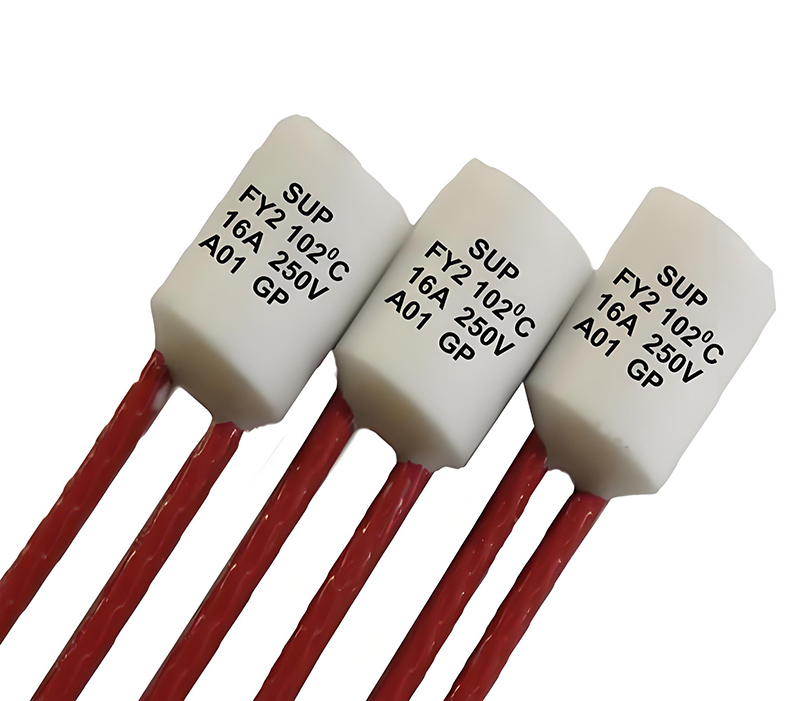
The temperature rating, the current rating, and the tolerance all have to match the original, and a higher-temperature fuse is not an upgrade. Fitting a 150°C part where the design called for 130°C removes the protection the product was built around. The insulation and plastic nearby may fail well before the new fuse ever opens. The same logic applies to current, since a 3 A part in a 2 A circuit lets the winding run hot for longer. When the marking on the old body cannot be read, check the datasheet for your part number or ask the original supplier for the drawing.
A breaker replacement is more forgiving on the temperature side but still needs the voltage, the current, and the mounting to match, and the panel cutout has to clear the bakelite body. A part rated for alternating current needs a datasheet check before it goes onto a direct-current load.
Sample and Drawing Requests
Both families can be quoted for evaluation, and the useful starting information is the rating, the mounting type, and the space around the part. Send the marking from the failed part, a photo of it in place, and the expected fault current, and the matching item can be quoted with a drawing for approval. Buyers who need a private label or a modified lead length can ask about OEM and ODM support at the same time.