


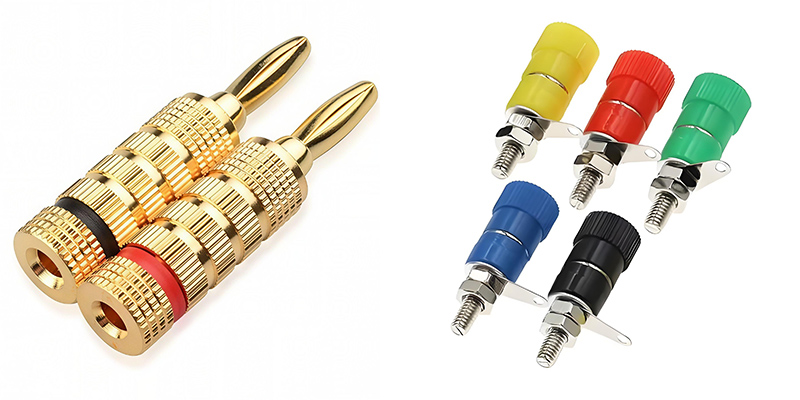
Banana plugs and binding posts are commonly used to make electrical connections in test equipment, power supplies, and audio systems. A banana plug has a spring-loaded metal contact that fits into a compatible socket, while a binding post uses a threaded terminal to secure bare wire or, in compatible designs, accept a banana plug.
Although these connectors are relatively simple, choosing the right combination requires attention to a few practical details. Plug diameter, socket depth, and wire size can all affect how securely the connection fits. Checking these dimensions, along with the current rating and connection method, helps ensure the components work properly together.
What Are These Two Parts Actually For
A banana plug and socket pair is a reusable connection. It goes on and off hundreds of times without tools, it stays on when the cable is tugged, and it makes contact on the side of the pin rather than at a single point. That is why bench equipment uses it instead of a screw terminal.
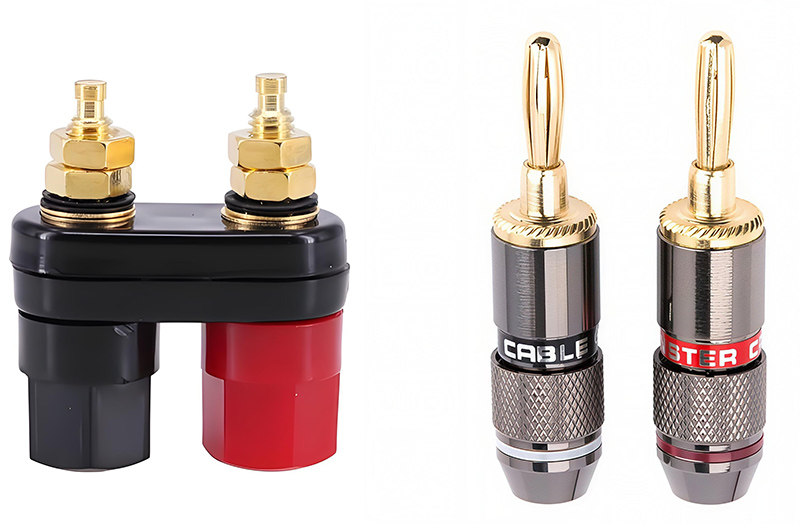
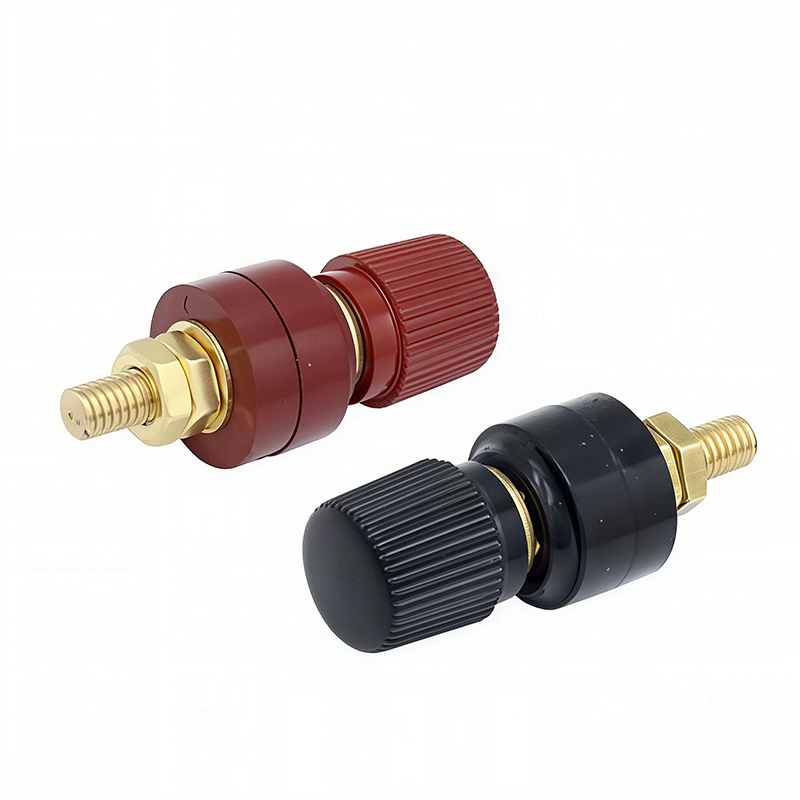
A binding post does the same job with more metal. Its central threaded rod carries a cap, the cap clamps a bare wire or a spade under it, and the center hole accepts a banana plug from the front. A post is the heavier option and it handles larger cable.
| Part | What It Accepts | Typical Place |
|---|---|---|
| Banana plug and socket | A 2mm pin pushed into a jack | Bench supply outputs, multimeter leads, speaker terminals |
| Binding post | Bare wire, a spade lug, or a banana plug | Amplifier and speaker rear panels, test fixtures, lab benches |
Which One Should a Bench Supply Use
The deciding questions are how often the connection is remade and how thick the cable is. For a multimeter lead or a jumper that moves several times an hour, a banana plug and socket is faster and it does not need a screwdriver. A plug pushes in and pulls out, and the spring strips in the pin keep tension against the socket wall.
For a permanent bench fixture feeding a load, a binding post is the better anchor. The cap takes a ring or a spade, the post can be tightened down on a heavy conductor, and the joint survives vibration from a pump or a motor on test.
Amplifier and speaker work mixes both. A post on the rear panel accepts a bare wire from a cheap cable and a banana plug from a finished one, so one part serves two kinds of user.
Why Do Some Plugs Not Fit Some Sockets
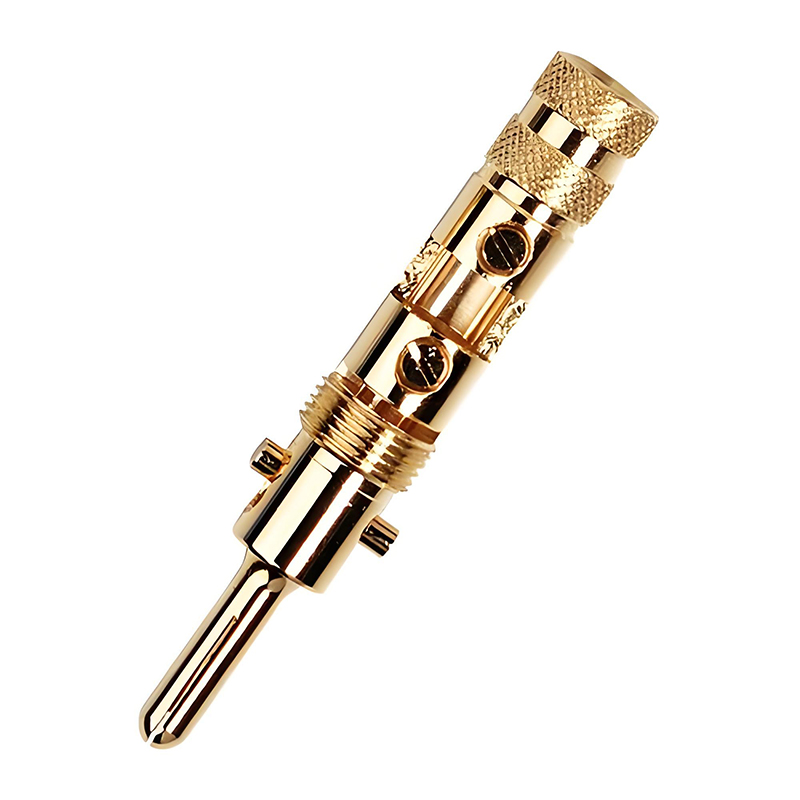
Sheathing is the reason. A sheathed plug has an insulating sleeve around the metal pin, and a sheathed socket has a recessed opening that only accepts that insulated body. A sheathed male plug will not enter an unsheathed female socket because the sleeve fouls on the socket face.
The reverse direction does work. An unsheathed plug fits a sheathed socket, since the bare pin slides into the recess without touching anything on the way in. That one-way compatibility is what makes mixed stock on a bench confusing, and it is worth standardizing on one type.
Sheathed versions exist for a reason, which is accidental contact on a live terminal. Where the voltage on the post is high enough to matter, the insulated pair is the correct choice even though it costs a little more.
Does Pin Length Matter
It does, and the market is not uniform. The original banana plug pin is about 20mm long, and that length is still common in Europe and elsewhere. Pins of about 15mm are common in the United States, and lengths between 11mm and 25mm all exist.
A stackable or sheathed plug that is longer than the socket recess will bottom out before the contacts engage properly, and a plug that is shorter than the recess can sit loose. Where a bench has instruments from several makers, check socket depth against the plug before ordering leads.
What Current Can They Carry
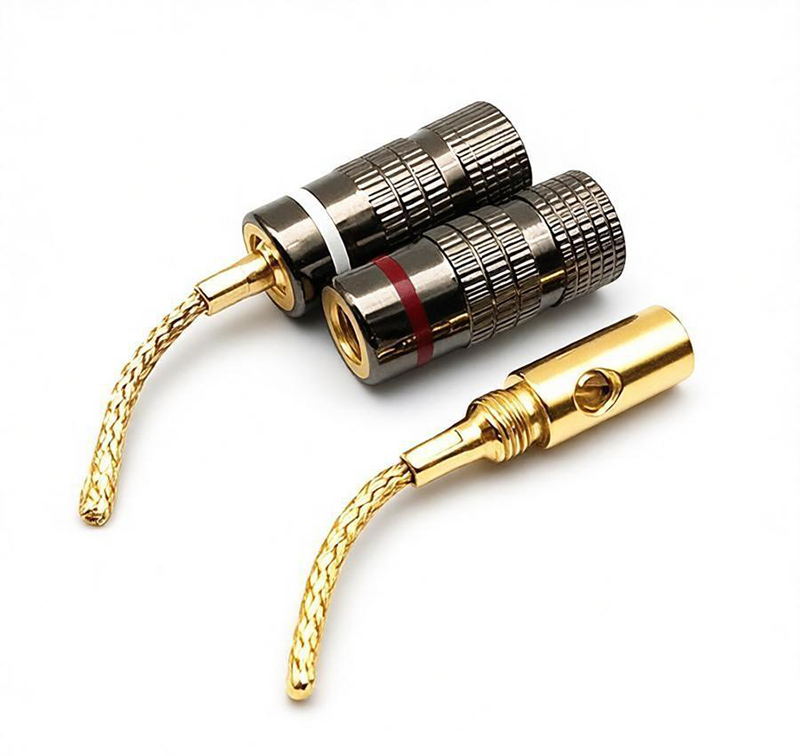
The two families are rated very differently, and the rating belongs to the part rather than to the pin size. Our banana plug and socket is rated 30VAC to 60VDC at a maximum of 32A, with a 2mm pin.
The binding post carries far more. The JS-301 and JS-302 posts are rated 30VAC to 60VDC at a maximum of 100A, in a 4mm or 8mm body, with a brass conductor and an ABS cap.
| Rating | Banana Plug and Socket | Binding Post |
|---|---|---|
| Voltage | 30VAC to 60VDC | 30VAC to 60VDC |
| Maximum current | 32A | 100A |
| Body size | 2mm pin | 4mm or 8mm |
| Operating range | -25°C to +85°C | -25°C to +85°C |
| Material | PVC and brass | ABS and brass |
Both figures describe the part, not the wire behind it. A 32A socket on a thin lead is still limited by the lead, and the cable size has to match the current the joint will actually see.
How Do You Terminate the Wire
On a binding post the wire goes under the cap. Strip enough insulation that the conductor sits fully under the head, twist the strands if the wire is stranded, and tighten the cap down on the metal rather than on the insulation. A spade lug under the cap makes a neater joint and can be removed without unwinding the wire.
On a banana plug the wire is usually soldered into the barrel or held by a small screw, depending on the body. Solder joints need the barrel hot enough that the solder flows into the strands, and a joint that looks shiny but did not wet the wire will pull apart later.
Either way, do not tin a stranded wire that is going under a screw cap. Solder creeps under pressure, the joint loosens over weeks, and the resistance rises without any visible sign.
What Goes Wrong in Service
Color coding is worth keeping consistent while the bench is being built. Red and black are the standard pair, and our range also includes yellow, blue, and green for multi-rail equipment where a mistake would be expensive.
Ordering the Right Pair
Send the voltage and current the joint will see, the pin or body size, and the mounting hole. Where a panel is already drilled, the body size decides what fits, and where a new panel is being made the post can be specified around the cable instead.
We build both families in the banana plug and socket range, including the sheathed versions where a live terminal is exposed, and the binding post range in 4mm and 8mm bodies. Samples and drawings are available, and the CZ-2082 plug and socket is the usual starting point for a bench lead.