


True bypass and buffered bypass handle the guitar signal differently when an effects pedal is switched off. With true bypass, a mechanical switch routes the signal around the effect circuit, allowing it to pass through without active processing. Buffered bypass keeps a buffer in the signal path, helping maintain signal strength and high-frequency response when using longer cables or multiple pedals.
The choice depends on how your pedalboard is set up. Cable length, pedal order, and the input characteristics of other pedals can all affect how the signal behaves. It is also worth considering what happens if a pedal loses power, since some buffered bypass designs may interrupt the signal while a mechanical true bypass can continue passing it.
What the Switch Actually Does
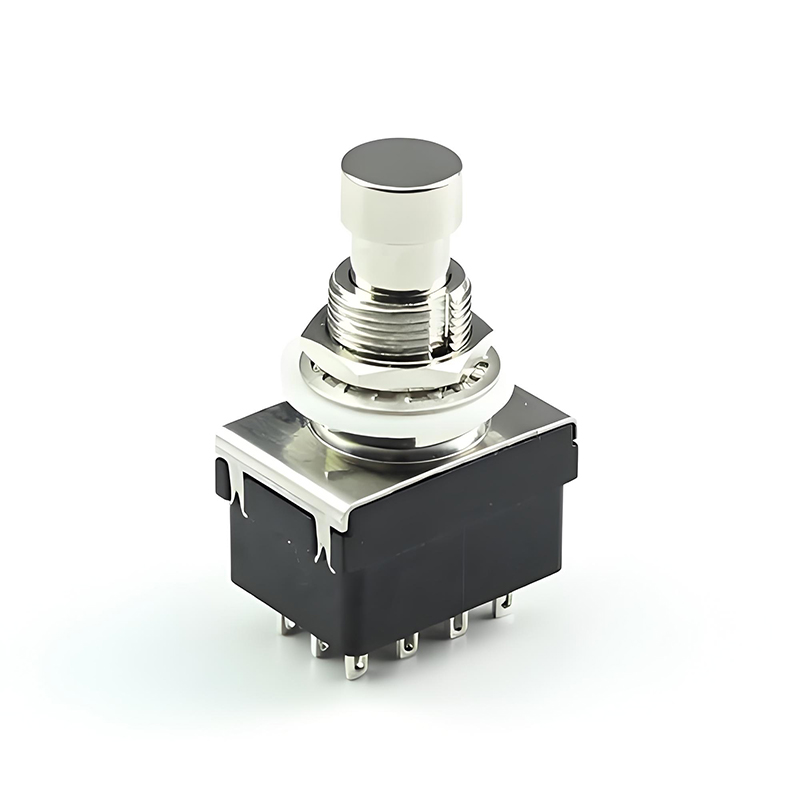
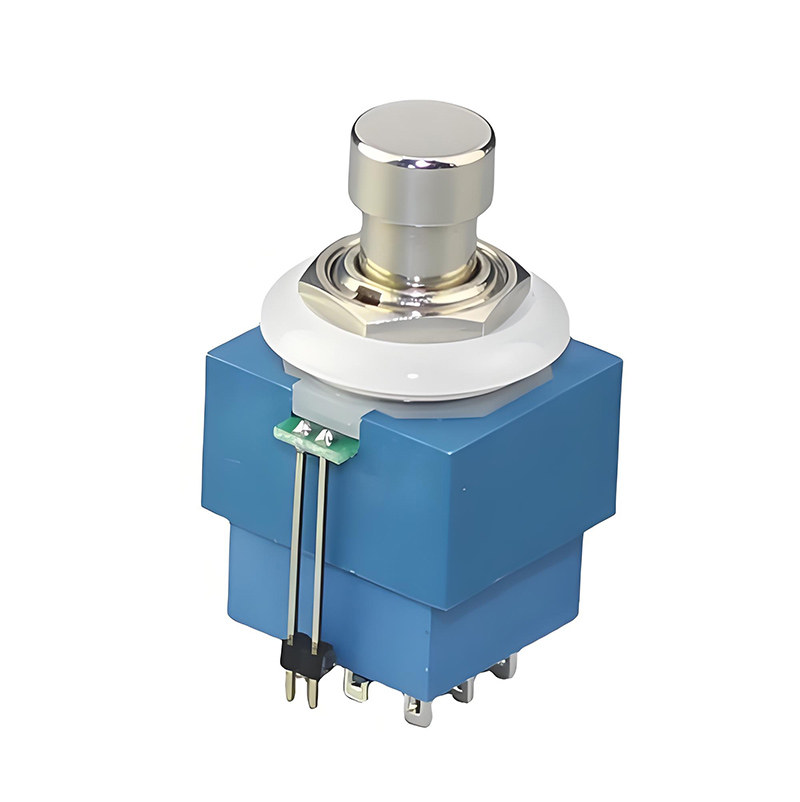
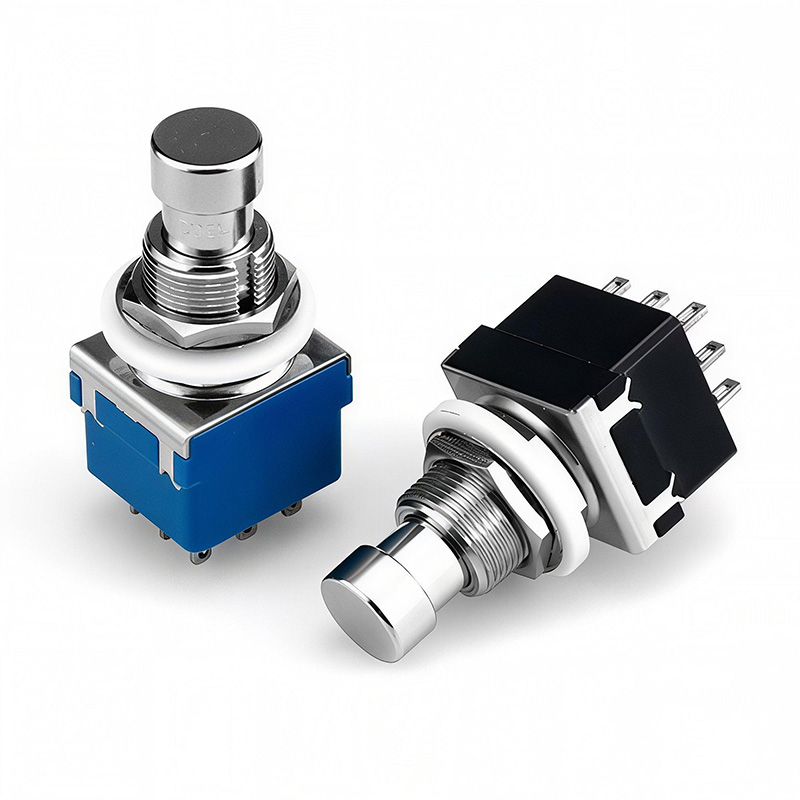
A 3PDT (three-pole, double-throw) switch is commonly used in true bypass guitar pedals. It allows the guitar signal to pass through the effect circuit when the pedal is engaged and bypass it when the effect is switched off. This mechanical switching arrangement keeps the bypassed signal out of the pedal’s active audio circuitry without requiring an additional buffer.
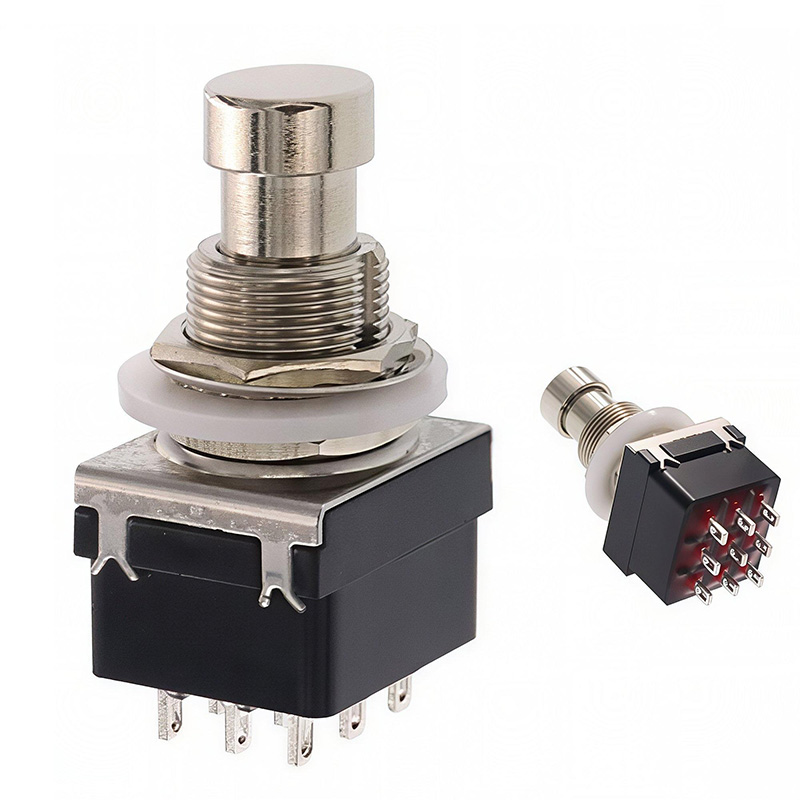
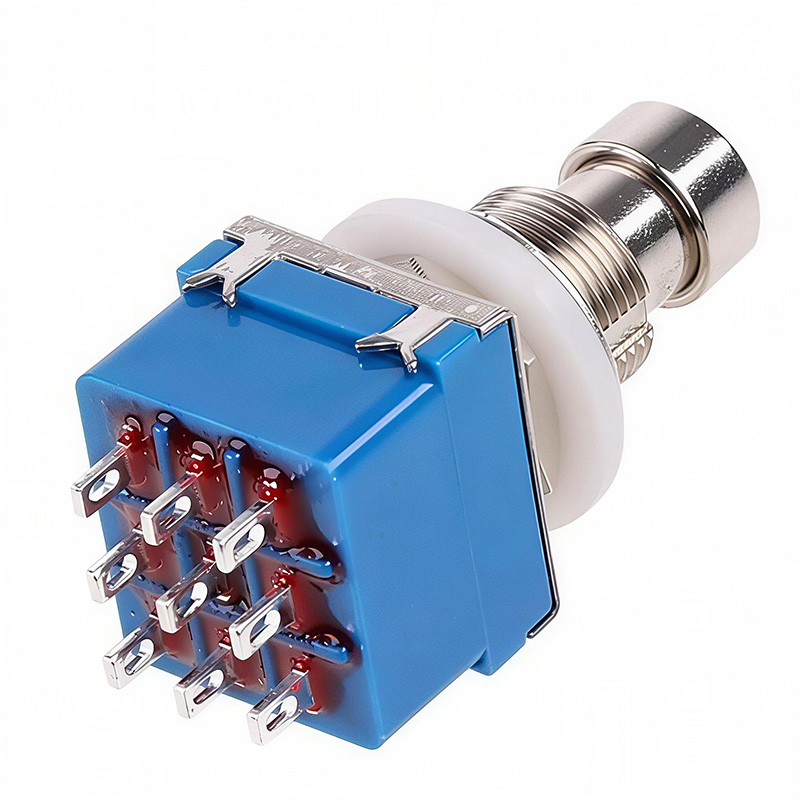
For pedal builders, models such as the PBS-24-302 and PBS-24-312 from our 3PDT switch range offer contact ratings of 3 A at 250 VAC or 6 A at 125 VAC, well above the current levels found in a typical guitar signal. The series includes blue, green, red, and black housing options, with ON-ON and ON-(ON) configurations available. The specified operating temperature range is -25°C to +85°C, with an operating force of 0.25 N or less.
The three independent poles also make it possible to handle audio routing and LED indication with a single switch. In a typical true bypass wiring arrangement, two poles switch the input and output signal paths, while the third controls the indicator LED. This keeps the LED switching separate from the audio contacts and simplifies the wiring inside the enclosure.
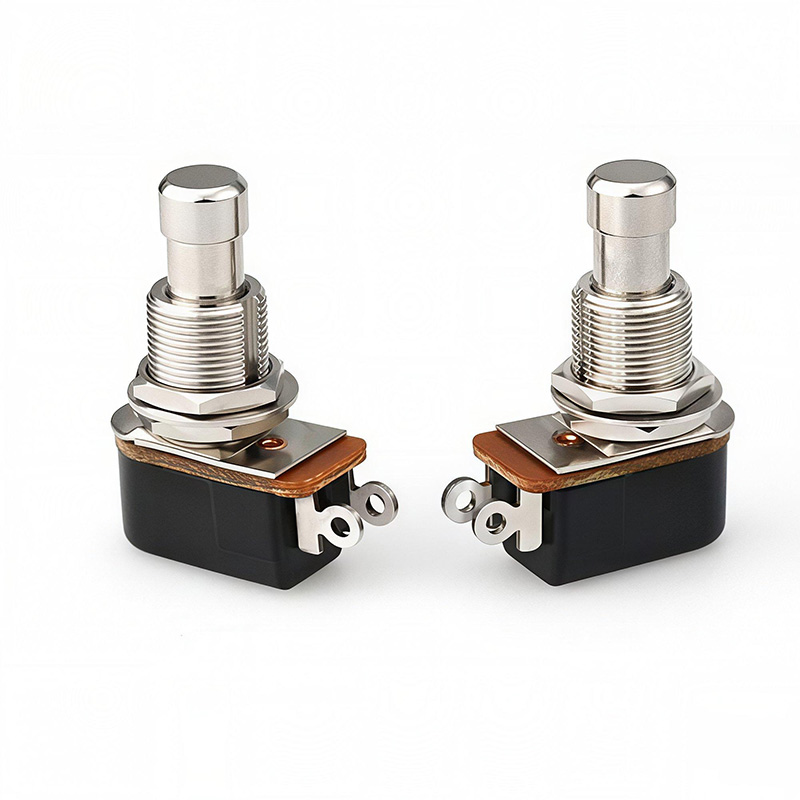
When choosing a guitar pedal switch, it is worth checking the switching function, terminal layout, and mounting dimensions against the pedal design. For conventional stompbox true bypass applications, a latching ON-ON configuration is generally used, while momentary versions are intended for different switching arrangements.
The Problem a Buffer Solves
A guitar pickup is a high-impedance source, and the cable that carries its output behaves like a small capacitor spread along its length. High impedance together with capacitance forms a low-pass filter, so the top end of the signal rolls off as the run gets longer. That roll-off happens before the signal reaches the amplifier, which is why a long cable can sound dull with every pedal switched off. Add several true bypass pedals in series, and every short jumper between them contributes its own share of the same effect.
A buffer is an active stage with high input impedance and low output impedance, which lets it accept a fragile pickup signal without loading it. From there, it drives the cable that follows with far more authority, so the signal reaches the amplifier closer to the shape it had at the pedal input. That is a defensive job rather than a tonal one.
True Bypass Against Buffered Bypass
| Question | True Bypass | Buffered Bypass |
|---|---|---|
| Signal path when the pedal is off | Switch contacts and short wiring only, effect circuit disconnected | An active input and output stage that stay powered and in circuit |
| Behavior on long cable runs | Added cable adds capacitance, which pulls the top end down | A low-impedance source drives the cable, so the top end holds its shape |
| Effect on a classic fuzz | The pickup impedance reaches the fuzz, which those circuits expect | A low-impedance source reaches the fuzz, and many of those circuits react badly |
| What happens with a dead battery | Signal still passes, because the route is purely mechanical | Signal often stops, since the active stage needs power to pass anything |
| Switching noise | Some contact pop is possible, because the switch breaks the path instantly | Usually quieter at the switch, though the active stage adds its own noise floor |
| Typical use case | Compact boards, short runs, players who want a pedal to vanish when off | Large boards, long runs to the amp, many pedals in series |
Common Misconceptions About True and Buffered Bypass
True bypass and buffered bypass are often discussed in guitar forums, with players sharing different experiences of how each affects their sound. Some of these opinions come from genuine differences between pedal setups, but the results are not always caused by the bypass design itself. A few common assumptions are worth looking at more closely.
Does True Bypass Always Sound Better?
True bypass allows the guitar signal to pass around the effect circuit when the pedal is switched off, but that does not necessarily mean better sound quality. In a pedalboard with several true bypass pedals and long cables, the combined cable capacitance can reduce high-frequency response, particularly when the guitar’s pickups are driving the signal directly.
A well-designed buffer helps reduce this effect by providing a low-impedance output that can drive longer cable runs. Whether the difference is noticeable depends on the guitar pickups, total cable length, and the other pedals in the signal chain.
For a simple setup with short cables, true bypass may work perfectly well without a buffer. On a larger pedalboard, buffered bypass can help maintain a more consistent signal.
Do Buffers Change Your Guitar Tone?
Buffers can affect the way a guitar signal behaves, but that is not always a problem. A properly designed buffer generally maintains the signal’s frequency response while reducing the influence of cable capacitance. This can be particularly useful when several pedals and longer cables are involved.
However, placement matters. Some vintage-style fuzz and wah circuits rely on direct interaction with the guitar pickups. Putting a buffer before these pedals can change their response, affecting how they react to picking dynamics or the guitar’s volume control.
This does not mean buffers are unsuitable for every pedalboard. In many setups, a single buffer placed after pickup-sensitive effects can provide the benefits of a low-impedance signal without interfering with those circuits.
Myth Three: More Pedals Means You Need a Buffer
Count matters far less than total cable length and placement. Four pedals on a short board may need nothing, while two pedals plus a long run to the amp may need help. A rule built on the number alone sends people the wrong way, since capacitance depends on the distance the signal travels. What the buffer cares about is how much cable sits after it and how much loss builds up before the amp input.
Where to Place a Buffer in Your Pedal Chain
Where you place a buffer can make a noticeable difference in how your pedalboard responds. For setups with several pedals and long cable runs, placing a buffer near the beginning of the signal chain can help maintain high-frequency response by providing a low-impedance output to drive the pedals and cables that follow.
Another common position is near the end of the pedalboard, particularly when a long cable runs from the board to the amplifier. A buffer here helps drive that final cable, reducing the high-frequency loss that can occur when a high-impedance signal travels over a longer distance.
Some pedals, however, work better without a buffer directly in front of them. Classic Fuzz Face-style circuits are a good example. Their response depends partly on the interaction between the guitar pickups and the pedal’s input impedance. Adding a buffer before the fuzz changes that relationship and can affect the sound, volume knob response, and playing dynamics.
If your pedalboard includes a vintage-style fuzz, try placing it before the first buffer. This allows the fuzz to interact directly with the guitar while the buffer handles the remaining signal chain. The best arrangement will still depend on the pedals you are using and how they respond to one another.
Conclusion
For a pedalboard with short cables and only a few effects, true bypass is often sufficient. Longer signal chains may benefit from a buffer, particularly when the cable running to the amplifier adds noticeable capacitance. If you are using a vintage-style fuzz, its position in the chain deserves some attention. Trying different arrangements with your own guitar and amplifier is often more useful than following a fixed rule.
For anyone building or modifying pedals, the bypass design also determines how the footswitch is wired. A conventional true bypass circuit often uses a 3PDT switch to handle audio routing and LED indication, while buffered designs have different switching requirements. Our 3PDT switch range and guitar pedal switches provide options for different pedal builds, with specifications available to check before selecting a part.